In 2025, the programme consisted of individual professional supervision sessions with psychologists, seminars, and professional networking meetings.
As part of the individual consultations, between 15 October and 15 December 2025, 10 producers had the opportunity to participate in three individual sessions with one of two psychologists selected by the Institute, both working in the field of professional development support: Justyna Józefowicz or Agnieszka Wróblewska.
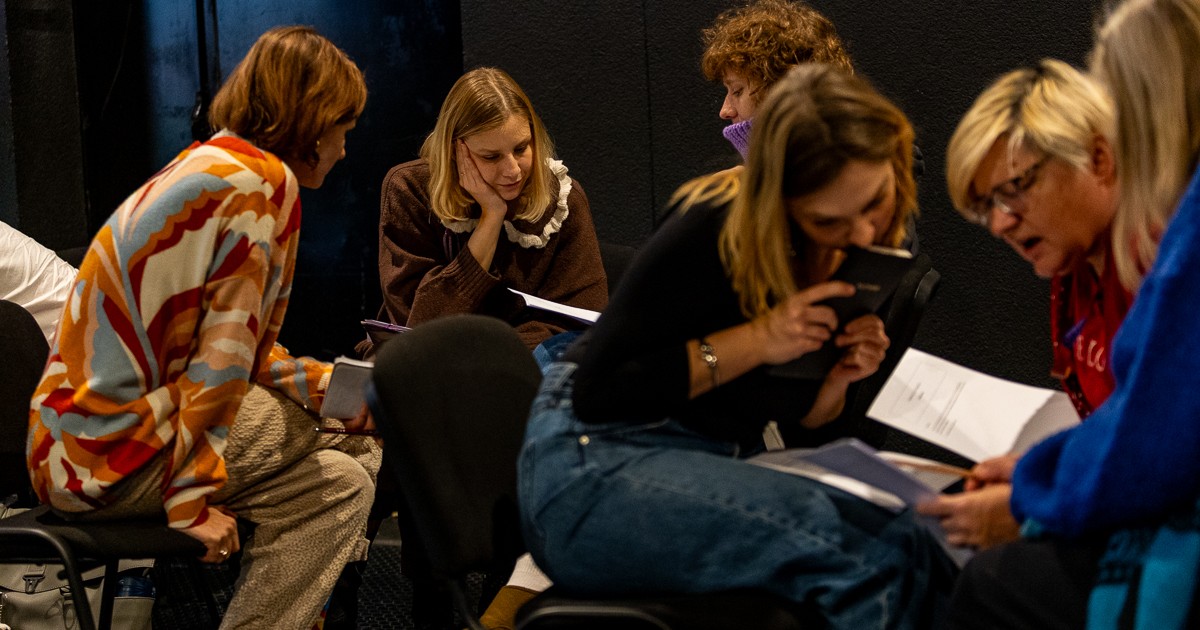
The programme also included two seminars with international experts, attended by 16 participants. The first seminar, led by Jana Grünewald, titled “Exploring the Values and Challenges of Producers’ Networks”, was held on 30 October 2025. The second seminar, led by Noémie Delfgou, titled “Why, Where & How to Present Artistic Work? An Exchange Meeting on (Inter)national Distribution”, took place on 10 November 2025. More information about the seminar topics is available here.
After both seminars, participants were invited to a “retreat session” – an informal gathering at the Institute’s café and garden. The purpose of the meeting was to create space for participants to spend time together in a relaxed atmosphere, to talk, network, or simply take a breath.
After the first edition of the programme concluded in 2025, we asked participants to evaluate it and share their experiences. Ten of the sixteen beneficiaries completed the survey, including seven who had participated in the professional supervision sessions. Below is a summary of the results.
On the professional supervision sessions
All survey respondents declared that the consultations addressed professional matters. Many producers worked to prevent professional burnout (build resilience) or to deal with its consequences. Current professional situations were analysed, but participants also developed future strategies, further development plans, more effective calendar management approaches, and ways to build a healthier work–life balance.
The supervision sessions received very positive feedback:
“I am grateful to the Institute and the programme authors for the idea of offering us supervision. I consider supervision participation to be a valuable process. I feel that I would like to be able to attend more sessions like that.” “Thank you very much once again for the opportunity to take part in supervision; it was a very valuable and supportive experience for me.”
Participants appreciated having dedicated time to reflect on their professional paths as producers or managers. Particularly valued aspects included the professionalism of the supervisors, who helped highlight both professional potential and challenges, as well as the specific advice offered on producing work and on work-life balance analysis. One respondent expressed gratitude for “very concrete solutions and proposals for change to implement, the supervisor’s understanding of the context of production work, and flexibility regarding the proposed topics for discussion.”
The majority of respondents expressed a desire to expand the scope of supervision, both in terms of the number of sessions and participants. This reflects the scale of needs within the community, as identified in the report on producers, and encourages continuation of the programme. The survey also included a proposal to involve an expert specialising in the production of performing arts, who could offer even more specialised guidance. Other suggestions included providing additional forms of support, such as “workshops on portfolio development or strengthening the language to speak about one’s own practice” or “case study activities, for instance, a collective analysis and evaluation of completed projects or tasks.”
On the seminars and the retreat sessions
All survey respondents highlighted the value of opportunities to meet, network, and exchange knowledge and experience, both with the invited experts and with fellow participants, including Institute staff members. They emphasised that such meetings constitute everyday professional support. The experts’ knowledge was also highly appreciated, including information on specific international events that participants found useful for their professional plans.
Participants expressed interest in more intensive networking, for example, through a shared contact list or a list of international networking events. Most respondents suggested organising longer seminars and/or increasing the number of seminar meetings. There were also calls to expand the workshop components of the seminars: “I liked the exercise and networking elements; I think these aspects definitely need to be enhanced.” Another proposal was to introduce professional consultations in formats such as job shadowing.
The retreat sessions were evaluated positively: “The retreat combined with refreshments is a very good idea that supports integration,” with suggestions to extend their duration: “In future editions, the retreat could last a bit longer, allowing for the establishment of deeper relationships, more time for conversation, fuller use of the potential of this meeting format, and the opportunity to rest.”
One respondent offered a more detailed suggestion regarding the further development of the seminars: “It would be great to repeat such seminars in different, specific contexts related to our work. The format of a leading person who shares knowledge and experience while also creating space and facilitating group collaboration and discussion is excellent. It would certainly work well in other topics as well, such as funding sources, workflow optimisation, accessibility, sustainable festivals, etc. With a greater number of meetings, a shared database of materials or tools might also be helpful.” This voice also appears to reflect systemic gaps in specialised education for producing professionals, echoing the report’s conclusions on producers working in theatre and the performing arts.
On the programme and its objectives
The Focus on Producers programme creates space for collective reflection on issues currently addressed in cultural policy, including sustainable production, ecology, and regional cooperation. It also aims to map the needs and areas of interest of producers working internationally or seeking further to develop international projects and the touring of performances.
The programme implements selected recommendations formulated in the report Producers as Central Figures in the Theatre and Performing Arts Ecosystem, published in 2025 by the Theatre Institute.
The programme format and contents in 2026 will be modified in response to identified needs and feedback received. Details to follow soon.